
Those dark oak cabinets from 1995 are staring back at you again. You’ve seen the Pinterest transformations. You’ve watched the YouTube videos. And now you’re wondering if your outdated kitchen could get the same treatment—or if you’re stuck ripping everything out and starting over.
Here’s the good news: professional cabinet painters transform stained and laminated cabinets every single day. And yes, painting over stained wood cabinets is absolutely possible when you follow the right process. The real question isn’t whether it can be done. It’s whether it should be done—and how to do it so the finish actually lasts.
Key Takeaways:
- Stained wood cabinets can be painted successfully with proper preparation, including cleaning, sanding, and priming.
- Laminate cabinets require a different approach but can also be painted when using bonding primers designed for slick surfaces.
- Surface preparation accounts for about 70% of the final result—skipping steps leads to peeling and chipping.
- Professional cabinet painting typically costs 40-60% less than full cabinet replacement.
- The right primer matters more than the paint itself when covering stained or laminated surfaces.
Why Stained Cabinets Are Actually Easier Than You Think
Stained wood cabinets have a reputation for being difficult to paint. The concern? That the dark stain will bleed through and ruin your fresh white finish.
This concern is valid—but it’s also completely solvable.
Wood stain penetrates the grain and contains tannins that can seep through standard primers. Red oak is especially notorious for this. But shellac-based primers like Zinsser BIN or high-quality stain-blocking primers create a barrier that locks everything in.
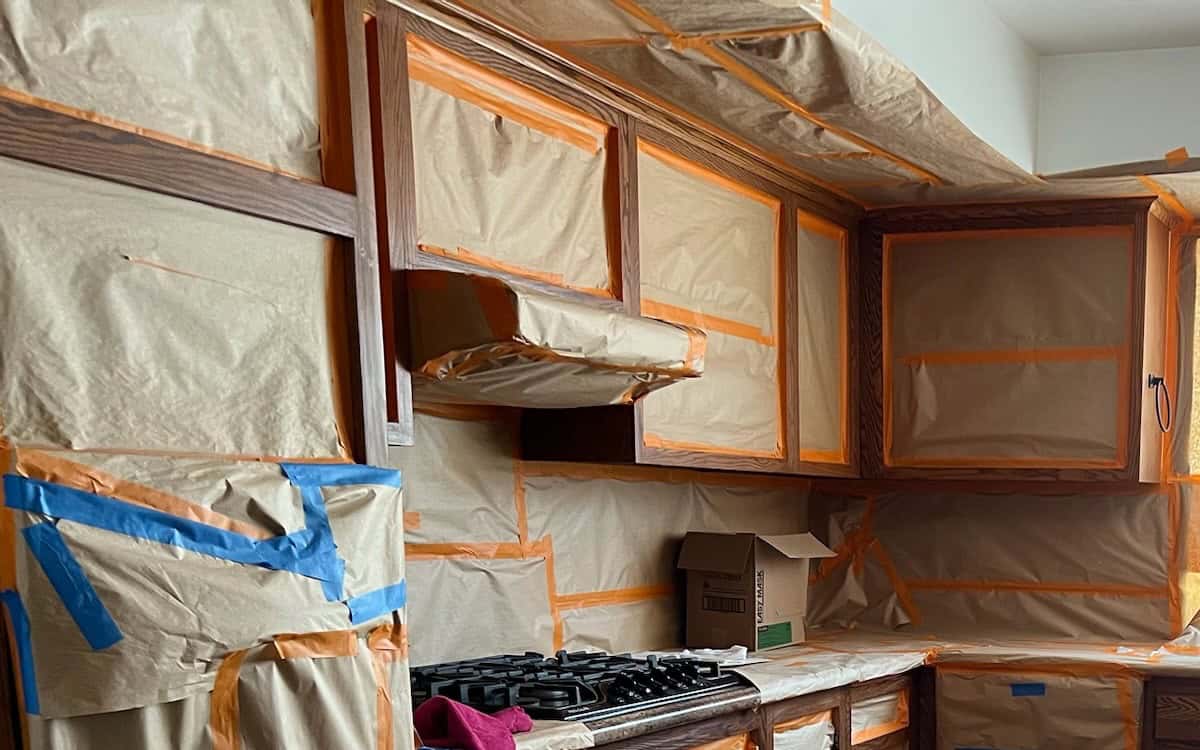
The process for painting over stained wood cabinets looks like this:
Step 1: Deep cleaning. Grease, grime, and residue from years of cooking create a film that prevents adhesion. A degreasing cleaner or TSP substitute cuts through this buildup.
Step 2: Sanding. The goal isn’t to remove the stain. It’s to scratch up the surface so the primer has something to grip. A 120-150 grit sandpaper does the job. Every square inch needs attention—including the inside edges of raised panel doors.
Step 3: Priming. This is where the magic happens. A shellac-based or high-adhesion primer seals in the stain and creates the foundation for your topcoat. One coat is rarely enough for dark stains. Two coats, with light sanding between, gives you insurance against bleed-through.
Step 4: Painting. With proper prep complete, the painting itself becomes straightforward. Two to three thin coats of high-quality cabinet paint—sprayed or brushed—deliver the smooth, durable finish you’re after.
Skip any of these steps, and you’ll see the consequences within months. Peeling around the handles. Chipping on the edges. Stain bleeding through your beautiful new white finish.
The Truth About Painting Laminate Cabinets
Laminate is a different challenge altogether.
Unlike wood, laminate has a non-porous, plastic-like surface. Standard primers and paints bead up and slide right off. It’s why so many DIY laminate painting projects fail within the first year.
But laminate cabinets can be painted. The approach just requires different products and more patience.
The key is mechanical and chemical adhesion.
Mechanical adhesion means scuffing the surface so paint has texture to grab onto. A fine-grit sandpaper (180-220 grit) or liquid deglosser creates this texture without damaging the laminate.
Chemical adhesion means using primers specifically formulated to bond with slick surfaces. Products labeled as “bonding primers” or “adhesion primers” contain resins that chemically grip non-porous materials.
Some laminate surfaces have a textured finish that accepts paint more readily. Others have a high-gloss surface that fights adhesion at every step. Knowing the difference affects both the process and the realistic expectations for longevity.
One honest truth: painted laminate will never be as durable as painted wood. The bond is fundamentally different. High-traffic areas like the cabinet doors around your stove and sink will show wear faster. For many homeowners, this tradeoff makes sense. For others, it’s a signal to consider different options.
When Painting Works—And When It Doesn’t
Not every cabinet is a good candidate for painting. Recognizing the difference saves time, money, and frustration.
Painting works well when:
- Cabinets are structurally sound with solid boxes and working hinges
- Wood surfaces are in good condition without major gouges or water damage
- Laminate is firmly adhered with no peeling or bubbling
- You’re changing color but keeping the same cabinet layout
- Budget matters more than a complete kitchen overhaul
Painting may not be the right choice when:
- Laminate is peeling away from the substrate
- Cabinet boxes are warped, water-damaged, or falling apart
- You want to change the cabinet style, not just the color
- Cabinets have a thermofoil coating that’s separating from the MDF core
- The existing finish has multiple layers of failing paint
A professional assessment takes the guesswork out of this decision. Most reputable cabinet painting companies offer free consultations and will tell you honestly whether your cabinets are good candidates—or whether you’re better off exploring other options.
The Cost Factor: Painting vs. Replacing
Kitchen cabinet replacement runs anywhere from $8,000 to $25,000 or more depending on the size of your kitchen and the materials you choose. Custom cabinets push that number even higher.
Professional cabinet painting typically costs between $3,000 and $7,000 for an average kitchen.
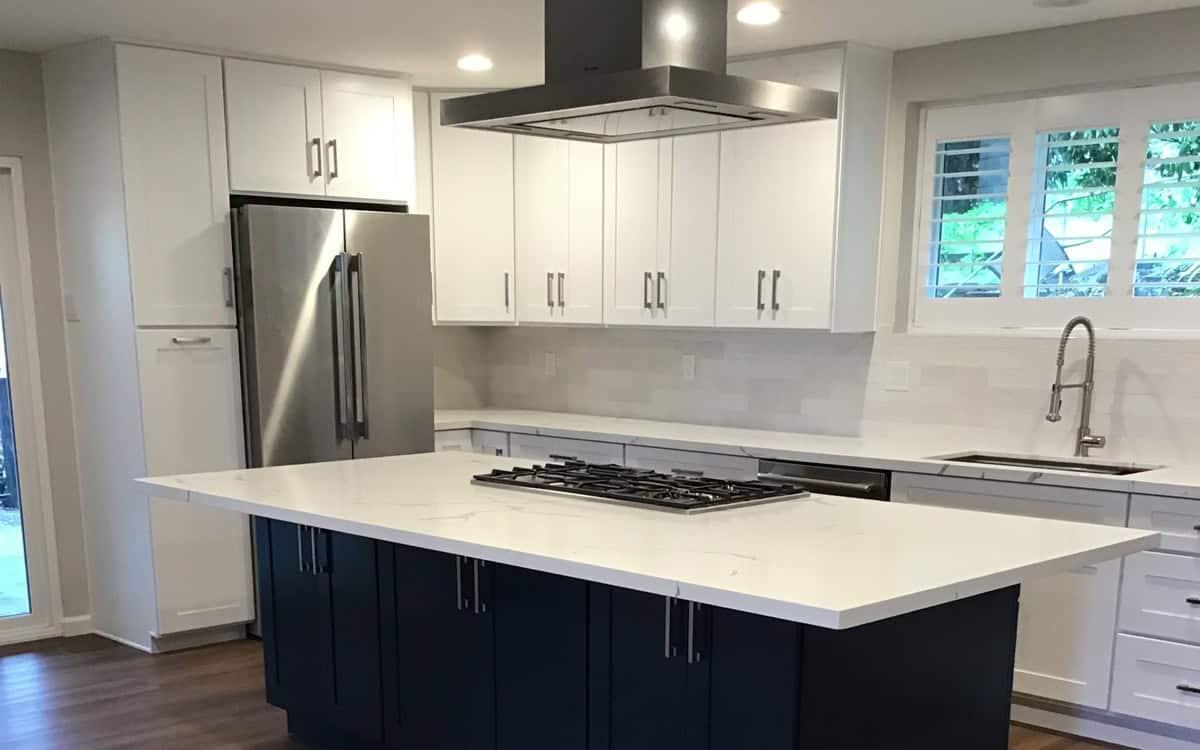
That’s a significant difference—one that lets many homeowners update their kitchen and have money left over for new countertops, hardware, or appliances.
But cost savings only matter if the job lasts. A cheap paint job that peels within two years isn’t a bargain. It’s a down payment on doing the job twice.
This is where professional preparation makes the difference. The time spent cleaning, sanding, priming, and applying multiple coats doesn’t show in the final photos. It shows in how the cabinets look three years later.
DIY vs. Professional Cabinet Painting
The internet makes everything look easy. Watch a few videos, buy some paint, knock it out over a long weekend.
Reality hits somewhere around hour six, when you’ve removed all the doors, realized you didn’t label them, and discovered that brushing paint onto raised panel doors without leaving streaks or drips is genuinely difficult.
DIY cabinet painting can work for homeowners who:
- Have experience with painting projects
- Own or can rent a paint sprayer
- Have a dedicated space for drying doors and drawers
- Can live without a functional kitchen for 1-2 weeks
- Understand that preparation takes longer than painting
Professional cabinet painting makes sense for homeowners who:
- Want a factory-like sprayed finish
- Need the kitchen functional within days
- Don’t have space for laying out dozens of cabinet doors
- Value their weekends more than the cost difference
- Want a warranty backing the work
Neither choice is wrong. But underestimating the time, skill, and workspace required for DIY leads to abandoned projects and mediocre results.
What to Look for in a Cabinet Painting Company
Not all painters offer cabinet refinishing. And not all cabinet refinishing companies deliver the same quality.
Questions worth asking:
- What’s your preparation process? Any answer that skips cleaning, sanding, or priming is a red flag. The prep process should take longer to explain than the painting itself.
- What products do you use? Quality matters. Professional-grade primers and paints designed for cabinetry cost more—but they flex with seasonal wood movement and resist the daily abuse kitchen cabinets endure.
- Do you spray or brush? Both methods can deliver quality results. Spraying creates the smoothest finish but requires more masking and equipment. Brushing and rolling can look excellent when done by skilled hands. The best companies match the method to the situation.
- Can I see examples of your work? Photos are good. Addresses of past clients willing to show their kitchens are better. Seeing three-year-old work tells you more than seeing three-day-old work.
- What’s your warranty? A company confident in their work stands behind it. A one-year warranty is standard. Two years is better. Any company unwilling to warranty their work is telling you something.
The Finish Line Starts With Good Prep
Painting over stained wood cabinets—or even tackling laminate surfaces—comes down to respecting the process. The unsexy work of cleaning, sanding, and priming determines whether your freshly painted cabinets still look good in 2027.
Cut corners, and you’ll see it. Invest in proper preparation, and you’ll forget the cabinets ever looked any other way.
Your kitchen has good bones. The layout works. The cabinet boxes are solid. What’s holding the space back is a dated finish that stopped reflecting your style years ago.
A fresh coat of paint—applied the right way—changes everything.
Ready to See What’s Possible?
If those stained or laminated cabinets have been bothering you for years, it might be time to do something about it. A professional assessment can tell you exactly what’s involved, what it costs, and how long the job takes.
No pressure. No hard sell. Just a clear picture of what your kitchen could look like—without the hassle and expense of tearing everything out.
Contact Procoat Painting San Diego Residential Commercial Painters at 619-353-5394 to schedule a free cabinet painting consultation. Walk through your options with someone who does this work every day and can give you a straight answer on what makes sense for your home.