
The color you pick for your cabinets gets all the attention. But the type of kitchen cabinet paint sitting under that color quietly decides how long the finish lasts and how good it looks in year five. That second choice is where a lot of kitchen refreshes either hold up or fall apart. So before you commit to a swatch, it helps to settle the question almost everyone skips: oil-based vs water-based paint for cabinets. The answer shapes how much the job costs, how the room smells while it dries, and whether the crisp white you chose stays white.
Here is the short version, and it might surprise you. For most kitchens today, the old “oil is tougher” rule no longer holds. Paint chemistry changed. And if you live in La Jolla, part of the choice has already been made for you by California law. Let’s walk through what is real and what is outdated.
Key Takeaways:
The real choice isn’t the color, it’s what’s under it
A kitchen refresh feels like a color decision. You scroll through photos, hold up samples, and imagine the room brighter. Fair enough. But the part that decides whether you are happy in three years is the paint itself, not the shade.
Repainting cabinets is a real investment of money and time. If the finish chips at the edges, turns sticky in summer, or slowly shifts yellow, the fix usually means doing the whole job over. That risk is the quiet worry behind most cabinet projects: paying good money for something that looks worse later. Picking the right paint is how you take that worry off the table.
Oil-based vs water-based paint for cabinets: how they really differ
For decades, painters reached for oil-based paint on cabinets for one reason. It dried into a hard, smooth shell that stood up to daily use. That part was true. Oil also levels out as it dries, so brush marks tend to disappear.
But oil comes with real trade-offs. It gives off strong fumes while it cures. It can take 24 hours between coats, which stretches the job across days. Cleanup needs mineral spirits, not water. And over time, oil-based paint turns yellow, worst of all on whites and soft neutrals.
Water-based paint splits into two groups, and the difference matters. Standard wall latex does not belong on cabinets. The product you actually want is a waterborne alkyd enamel, sometimes called a hybrid. It uses alkyd chemistry, the same family that made oil tough, carried in water instead of solvent. You get the hard, self-leveling finish of oil with low fumes, water cleanup, recoat times of about four to six hours, and no yellowing.
That last point sits at the heart of the oil-based vs water-based paint for cabinets debate. The reason pros once chose oil was hardness. Waterborne alkyds closed that gap. So the main argument for oil mostly went away.
Why oil is nearly off the table in La Jolla
There is a second reason this debate looks different in California. The state limits how much volatile organic compound, or VOC, paint can contain. In our area, San Diego County’s air quality rules cap the VOC level of paint sold for home use, and those limits run stricter than the federal ones. High-solvent oil paints do not meet them, so they have mostly vanished from local shelves.
This is about more than a rule on paper. VOCs are the fumes you smell during a paint job, and the EPA links higher VOC levels to indoor air quality problems, which matters in a room where you cook and eat. For a La Jolla homeowner, the practical takeaway is simple. A true high-VOC oil finish is hard to buy and hard to justify. A low-VOC waterborne enamel gives you the durability without the fumes.
The yellowing problem with white cabinets
If you are leaning toward white, cream, or pale gray, this section matters most. Oil-based paint yellows as its resin reacts with air over the years. The shift is slow. It gets worse in spots that see little natural light, like the inside of a cabinet or a corner near the fridge, and it cannot be reversed. The only real fix is repainting.
Water-based enamels do not have this problem. A white cabinet painted with a quality waterborne alkyd stays the white you picked. For a light kitchen, that one fact often settles the whole question.
What painters actually use now
Step into a serious cabinet job today and you will likely see one of two products: Benjamin Moore Advance or Sherwin-Williams Emerald Urethane Trim Enamel. Both are waterborne enamels built for cabinets, doors, and trim. They flow out smooth, harden into a tough finish, and hold their color.
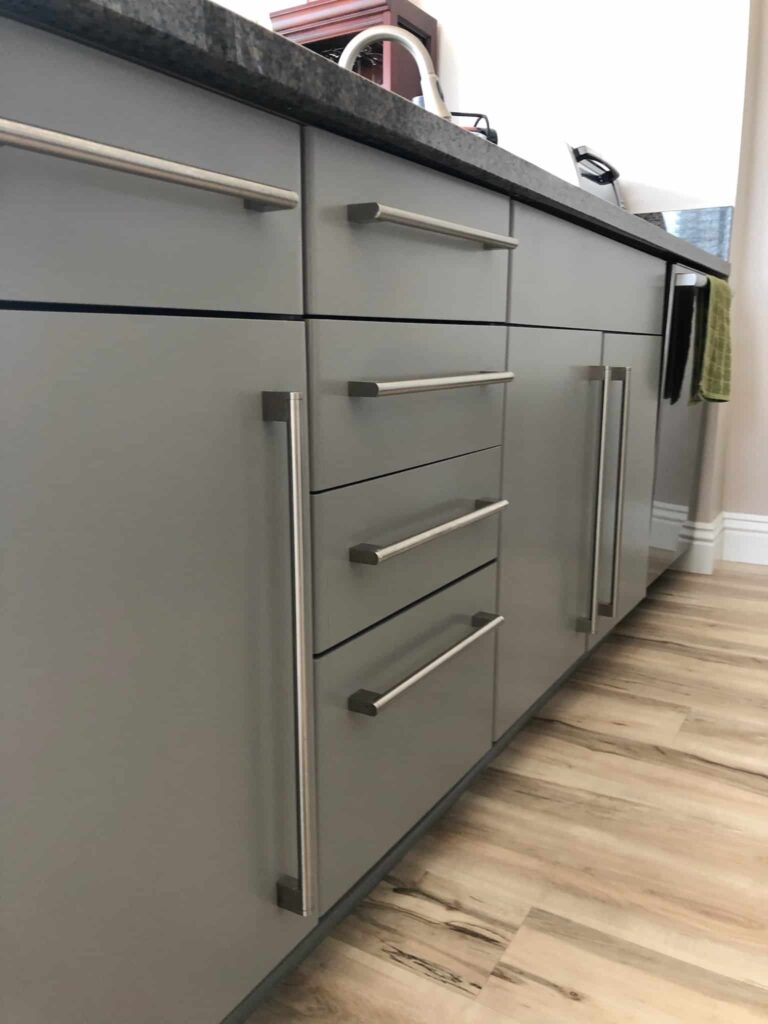
The product is only half the story, though. The finish you actually run your hand across comes from prep and how the paint goes on. Good crews degrease every surface, because kitchen cabinets carry years of cooking oil, then sand for grip, then prime with a high-bond primer before any color goes down. After that, they spray instead of brush, which is how you get an even, factory-style surface with no stroke marks. A great paint applied over greasy, unsanded doors will still peel. Solid prep with a mid-grade paint will outlast it every time.
What kitchen cabinet paint costs
Cost belongs in any honest comparison. According to HomeAdvisor, painting kitchen cabinets runs about $425 to $1,465, with an average near $940 for a standard job. Full professional spray jobs on larger kitchens, with complete prep and premium enamel, often land higher, in the $2,000 to $6,500 range. A coat done right lasts roughly 8 to 15 years before it needs attention.
Set that next to the cost of replacing cabinets, which usually starts around $10,000, and the case for a refresh gets clear. You keep the boxes you already have and change the part you see every day. The paint choice is what protects that spend.
A simple plan for getting it right
You do not need to become a paint expert. You need three questions for any painter you call:
Those three answers tell you more about the outcome than any color sample will.
Ready to refresh your kitchen the right way?
Your kitchen refresh should not ride on a guess about a can of paint. The cabinets you have are worth keeping, and the right finish can look new for the better part of a decade. The wrong one puts you back at square one in a couple of years.
If you are weighing oil-based vs water-based paint for cabinets and want a straight answer for your own kitchen, talk to the crew at Procoat Painting San Diego Residential Commercial Painters. We will look at your cabinets, tell you exactly which products and prep we would use, and hand you a clear written price before any work begins. Call 619-353-5394 to book your in-home estimate, and let’s keep your kitchen looking the way you wanted it for years, not months.