
How to touch up paint on walls comes down to matching more than the color. The sheen, surface texture, original applicator, wall condition, and age of the existing finish all affect how well a small repair blends.
For a Rancho Santa Fe home, the best results usually come from using the original paint when possible, preparing the damaged area carefully, and applying as little new paint as needed.
Why Touch-Up Paint Can Look Different
Even when the color name is correct, a touch-up can still stand out. The surrounding finish may have aged, been cleaned repeatedly, received different light exposure, or developed a slightly different surface texture over time.
Benjamin Moore recommends matching the color, sheen, and surface texture, then using the same type of applicator that was used on the original wall.
Flat and matte finishes also tend to touch up more easily than glossier finishes. Higher-sheen coatings reflect more light, which can make small differences in texture or film build easier to see.
Start by Checking the Damage
Before opening a paint can, look closely at the mark. Some scuffs can be cleaned without repainting, while a chipped or patched area needs more preparation.
A small surface mark may only need cleaning and a light touch-up. A nail hole, dent, or drywall repair may need patching, sanding, and primer before finish paint is applied.
If the damaged area is large or the surrounding wall already has several visible repairs, a full-wall repaint may be the cleaner option.
How to Match Touch-Up Paint
Use the original paint when you still have it and it is in usable condition. Stir it thoroughly so the pigments and finish components are mixed evenly before you test the repair.
If you no longer have the original paint, take a physical sample to a paint retailer for color matching. A physical sample is usually more useful than relying only on a phone photo because lighting and camera settings can change how a color appears.
Match the sheen as closely as the color. A satin repair on an eggshell wall can stand out even when the color is very close.
How to Touch Up Paint on Walls
1. Clean the area. Remove dust, fingerprints, and light grime with a soft cloth and mild cleaner that is safe for the existing coating. Let the wall dry before continuing.
2. Repair the surface. Fill small holes or dents, let the patch dry, and sand it smooth. Keep sanding focused on the repair so the surrounding finish is not dulled.
3. Prime bare or repaired drywall. Joint compound and exposed drywall are more porous than the painted wall. Primer gives the finish coat a more even base.
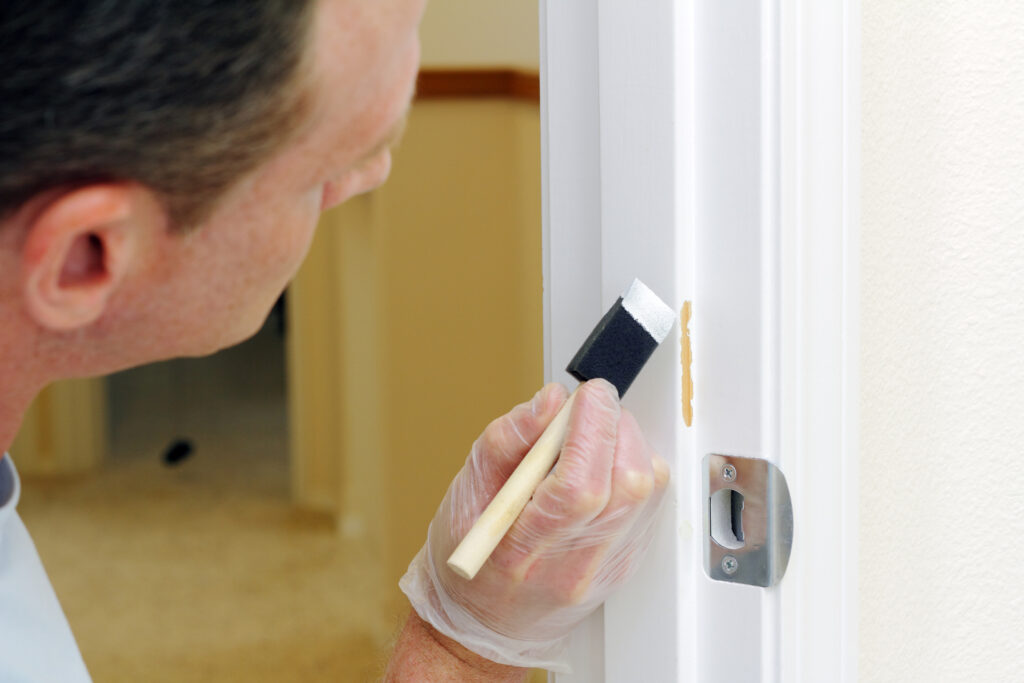
4. Match the applicator. Use a small roller on a wall that was originally rolled, or a similar brush if the original finish was brushed.
5. Apply very little paint. Start in the center of the repair and avoid loading the area with a thick coat.
6. Blend the edges. Extend the touch-up lightly into the surrounding finish so the transition is less abrupt.
7. Let it dry before judging the match. Follow the product’s dry and recoat instructions before deciding if another coat is needed.
Why the Original Applicator Matters
A brush and roller can leave different surface patterns even when the paint color and sheen match. Those texture differences can become visible when daylight or side lighting hits the wall.
Benjamin Moore recommends using the same application method used for the original coating and following the same application direction. A small roller is usually the better choice when the wall was originally rolled.
You do not need one universal roller nap for every wall. Match the existing texture as closely as practical based on how smooth or textured the original finish is.
When Primer Is Needed
Primer is not required for every minor touch-up. If the surface is intact and you are correcting a small color defect, a matching finish coat may be enough.
Primer becomes more useful when the area includes bare drywall, joint compound, a repaired crack, exposed substrate, or a stain that needs to be blocked.
For patched drywall, primer helps reduce differences in absorption that can make the repaired area look duller or glossier than the surrounding wall. Our guide to surface preparation for painting explains why prep matters before the finish coat.
When Repainting the Full Wall Makes More Sense
A small repair does not always stay hidden. If the wall has several patched areas, a higher-sheen finish, a large repair, or noticeable color and sheen changes, repainting the full wall may produce a cleaner result.
There is no universal age cutoff that says paint older than a certain number of months or years cannot be touched up. The better test is how closely the new paint matches the existing color, sheen, and texture after it dries.
If a repair continues to flash after careful touch-up work, repainting from corner to corner can reset the wall to one consistent finish.
How We Handle Interior Wall Repairs in Rancho Santa Fe
At Procoat Painting San Diego, we look at the wall condition, existing finish, repair size, and surrounding surfaces before recommending a touch-up or full-wall repaint.
Our current site confirms Rancho Santa Fe service, free estimates, free color consultations, licensed and insured service under California contractor license #806008, and a 4-year labor warranty. Procoat Painting San Diego was founded in 2002 and maintains an A+ Better Business Bureau rating.
For larger repairs or room updates, see our interior house painting services.
Frequently Asked Questions
Why does my touch-up paint look shinier than the wall?
The sheen, applicator texture, paint age, and amount of new paint can all change how light reflects from the repaired area. Matching the original product and application method gives you the best chance of blending it.
Should I use a brush or roller for wall touch-ups?
Use the same type of tool that was used on the original wall whenever possible. A small roller is usually better for touching up a wall that was originally rolled.
Do I need primer before touching up paint?
Not for every minor mark. Primer is more useful when the wall has been patched, bare drywall is exposed, or the repair has a different porosity from the surrounding surface.
When should I repaint the entire wall instead?
Consider a full-wall repaint when the repair area is large, the existing finish has changed noticeably, several touch-ups are visible, or the sheen and texture will not blend after drying.