
The hire painter vs. DIY painting decision looks simple when you compare a contractor’s proposal with the price of a few paint cans. The gap often changes after you account for surface preparation, tools, property protection, repairs, cleanup, safety, and the time needed to complete the work.
Some small interior projects are reasonable for an experienced homeowner. Larger interiors, cabinets, damaged surfaces, and multi-story exteriors carry more risk and require more equipment. This guide will help you compare the full scope before choosing either option.
Key Takeaways:
What the Cost Comparison Should Include
A useful comparison includes every item needed to complete the same scope. Comparing a full professional proposal with paint alone makes the DIY option look less expensive than it may be.
A DIY budget may include:
A professional proposal should cover the same categories and state which items are included or excluded. The total may also include project management, insurance, equipment, disposal, and warranty coverage.
Do not assign an hourly value to your personal time unless that helps your decision. The better question is how much of your schedule the project will use and what happens if it takes longer than planned.
Why Surface Preparation Changes the Price
Painting is only one part of the work. Surfaces may need washing, patching, sanding, caulking, scraping, stain blocking, or spot priming before the finish coat is applied.
DIY budgets often leave out preparation materials or assume every wall is ready for paint. That can lead to added store trips and more work after the project starts.
A professional should inspect the surfaces before setting the final scope. The proposal should explain which repairs are included and which problems need another contractor.
Preparation also affects the finished appearance. New paint does not hide raised patches, peeling edges, glossy areas, grease, dust, failed caulk, or water damage.
This guide to surface preparation before painting explains why the condition below the coating matters as much as the product placed on top.
What a Professional Proposal Should Cover
A proposal should give you enough detail to compare the contractor’s work with your DIY plan.
Look for the following information:
A lower proposal may include less preparation, fewer surfaces, or a different product. Ask questions before deciding that one contractor is simply charging more for the same work.
Procoat Painting’s current residential pages state that its projects include a 4-year labor warranty. Confirm that coverage and its exclusions in the proposal for your project.
Projects That Can Be Reasonable for DIY
DIY can be a practical choice when the work is small, the surfaces are sound, access is simple, and the homeowner has enough time to complete each step.
Examples may include:
Before starting, confirm that the existing coating is stable and the surface is clean and dry. Test the color and sheen in the room instead of relying only on a small sample card.
Plan enough time for preparation and drying. Rushing the second coat or placing furniture against paint that has not cured can damage the finish.
Projects That Often Need Professional Help
Some projects require more equipment, repair knowledge, dust control, or application experience than a basic room repaint.
Multi-story exteriors: High walls, rooflines, uneven ground, overhead lines, and heavy equipment increase the risk. Hiring a company does not remove every risk, but trained workers should have the proper equipment and work procedures.
Cabinet refinishing: Cabinets require cleaning, labeling, sanding, dust control, suitable coatings, and careful curing. Brush marks, poor adhesion, blocked doors, and soft finishes are difficult to correct after reinstallation.
Damaged surfaces: Peeling coatings, water stains, soft drywall, rotten wood, failing stucco, and open joints need more than a new finish coat.
Large color changes: Moving between very dark and very light colors can affect primer choice, coverage, coat count, and touch-up needs.
Occupied homes with limited time: Furniture protection, room access, pets, children, work schedules, and daily cleanup may make a long DIY project difficult.
Homes built before 1978: Sanding, scraping, and other work that disturbs old coatings may create lead dust. The EPA recommends that homeowners use lead-safe practices and hire a lead-safe certified contractor for work that may disturb paint in older homes. Review the agency’s lead-safe painting guidance for homeowners before starting.
How Coastal Conditions Affect Exterior Work
San Diego does not have one exterior exposure. A shaded coastal home and an inland home with strong afternoon sun can place different demands on the coating.
Salt, dirt, mildew, chalking, direct sun, irrigation, and moisture around joints can affect preparation and product choice. The surface should be cleaned and allowed to dry before coating.
South- and west-facing walls may show fading or weathering sooner because they often receive stronger sunlight. Shaded walls and areas near plants may stay damp longer and collect more biological growth.
Do not assume that a coating labeled for exterior use fits every material. Stucco, wood, metal, masonry, and previously coated surfaces may need different preparation and primers.
Our article about why exterior paint peels explains how moisture, contamination, failed preparation, and coating conditions can lead to early failure.
How to Compare Your Time With the Project Schedule
A professional company may complete work faster because several trained painters can prepare and coat different areas at the same time. That does not mean every professional project follows the same schedule.
Project length depends on the size, repairs, access, number of colors, drying conditions, coat count, and how much of the home remains occupied.
A DIY project may fit around evenings and weekends, but setup and cleanup are repeated each time work stops. Rooms may also remain out of use longer.
Before choosing DIY, write down each phase:
This gives you a better schedule than estimating from painting time alone.
Color Selection Can Affect the Scope
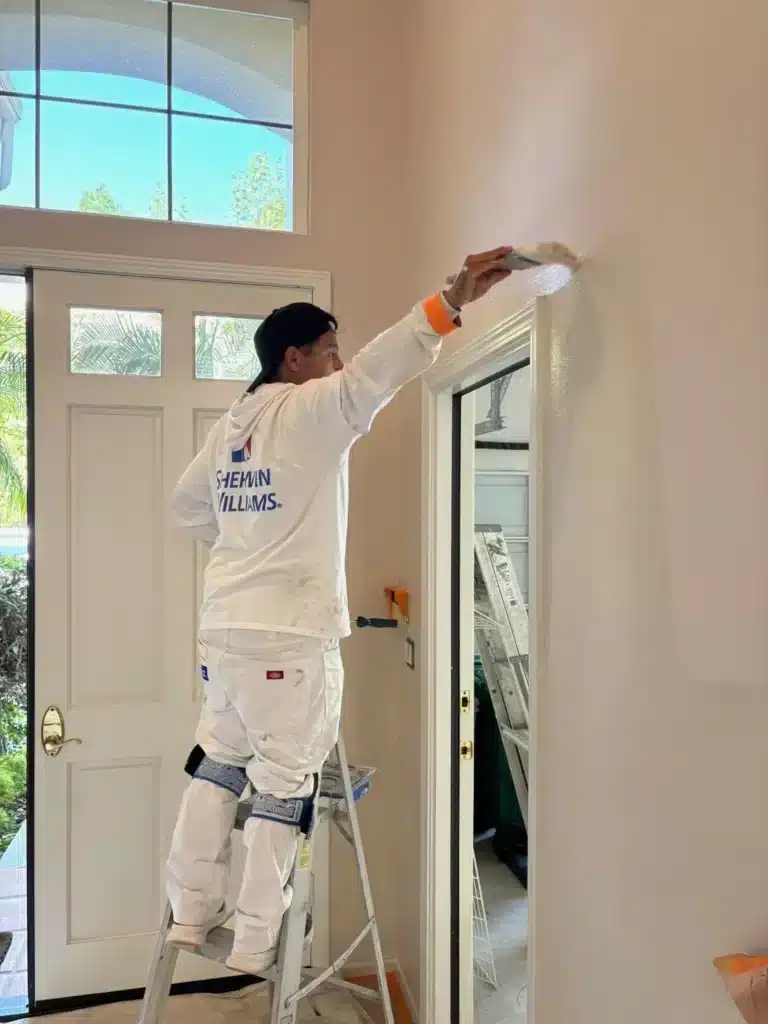
Color choice is not only a design decision. It can affect primer, coverage, coat count, touch-ups, and how visible surface defects appear.
Deep colors may need a specific base or primer. Bright whites may show stains and missed repairs. Higher-sheen finishes can reflect more light and draw attention to uneven walls.
Testing samples in the room can reduce the chance of repainting after the full color is applied. Check samples in daylight and under the lights used at night.
Procoat Painting states that expert color consultations are included with its painting projects at no added charge. Learn more about the benefits of a professional color consultation before choosing a final palette.
Build a Fair DIY and Professional Comparison
Use the same scope for both options. If the contractor’s proposal includes ceilings, trim, repairs, protection, and cleanup, those items belong in the DIY plan too.
Create two columns and compare:
Do not add a general percentage for mistakes. Instead, include a small material allowance based on the actual project and the products being used.
For interior projects, this guide to planning an interior painting budget can help organize the surfaces, repairs, products, and other pricing factors.
Questions to Ask Before Hiring a Painter
A detailed estimate helps you decide if professional service provides enough value for the project.
Procoat Painting’s current website states that the company has served the area since 2002, offers free estimates, includes color consulting, and provides a 4-year labor warranty for residential work.
Ask for the project-specific scope and warranty terms before approving the proposal.
Frequently Asked Questions
Is it cheaper to paint one room myself?
It can be when the walls are in good condition, access is simple, and you already own the tools. Build a full supply list before comparing the cost with a professional proposal.
Should homeowners paint a two-story exterior?
Two-story work involves ladders, high surfaces, uneven ground, overhead hazards, and added equipment. Homeowners without the proper training and equipment should consider hiring a qualified contractor.
Does professional painting include the paint?
Many proposals include paint and standard supplies, but this should not be assumed. Check the product line, sheen, colors, coat count, and included materials in the proposal.
Can a professional fix a failed DIY finish?
Often, but the surface may need added sanding, cleaning, priming, or coating removal first. The correction can cost more than painting a properly prepared surface from the beginning.
Compare the Full Scope Before Deciding
DIY can be a good fit for a small, low-risk interior project when the homeowner has the time, tools, and experience to complete the preparation and application correctly.
Professional help becomes more valuable as the project adds height, repairs, specialty coatings, cabinets, older surfaces, large color changes, or a short completion window.
Procoat Painting provides interior, exterior, cabinet, and commercial painting across Greater San Diego. The company offers free estimates so homeowners can compare a project-specific proposal with the full DIY plan.
Contact Procoat Painting at 619-353-5394 to schedule an estimate and review the preparation, products, schedule, and warranty for your project.